Plein Champ 2026 in Le Mans: Three Days of Live Street Art
15 October 2026
From 3 to 5 July 2026, the Gué-de-Maulny park hosted the eighth edition of Plein Champ, the urban art festival of Le Mans, in western France. Thirty-seven street artists, from France and abroad, painted live over three days, in full view of passers-by. We were there on the Sunday, the final day, when most of the walls were close to finished.
A park turned into an open-air studio
Founded in 2019, the festival takes over the Gué-de-Maulny park, along the Huisne river east of the city centre, on the first weekend of July each year. For three days the park is split into three zones linked by pedestrian paths, holding the festival's different formats: wall pieces mounted on temporary structures, cube pieces, the tunnel walls left open for free painting, and the fisherman's house mural. Everything is free: entry, workshops and concerts.
On site, it feels more like a building site than an exhibition. Artists paint from 4 to 8 pm on the Friday, then 2 to 7 pm on Saturday and Sunday, while DJ sets run on two stages and workshops turn over nearby. From 10.30 pm on Friday and Saturday, Philippe Echaroux's night projections take over the trees and facades. The festival is run by the city of Le Mans and Le Mans Métropole.
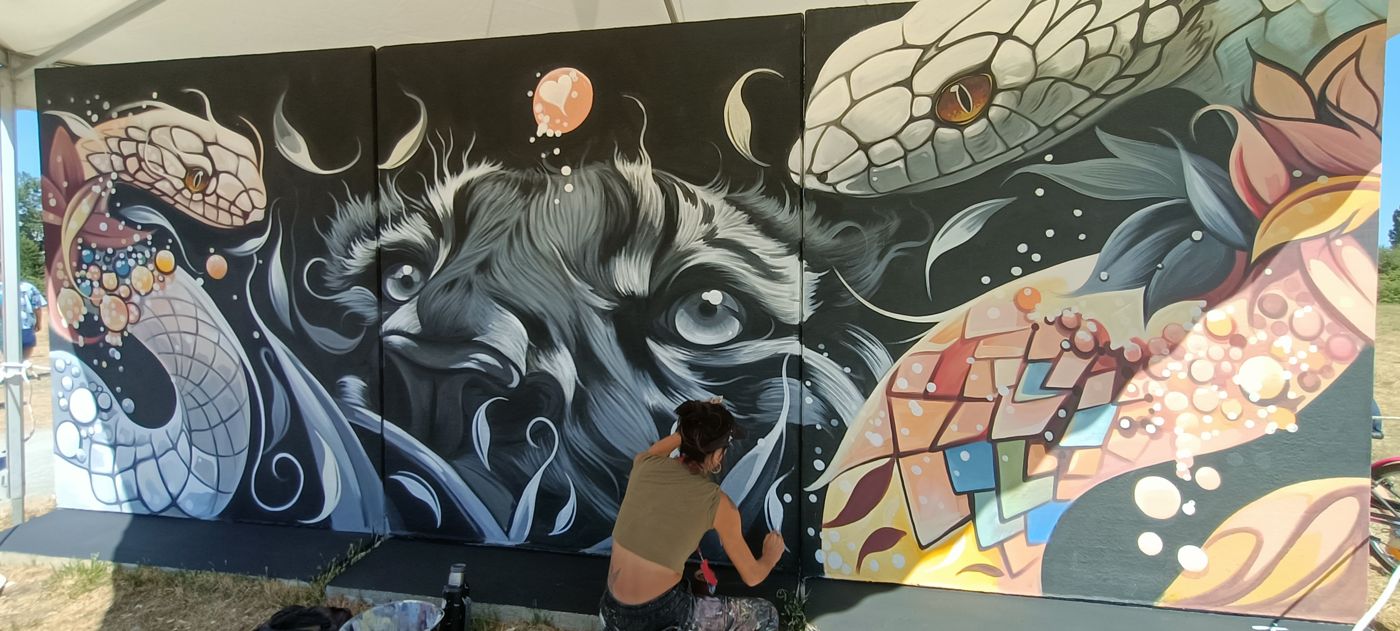
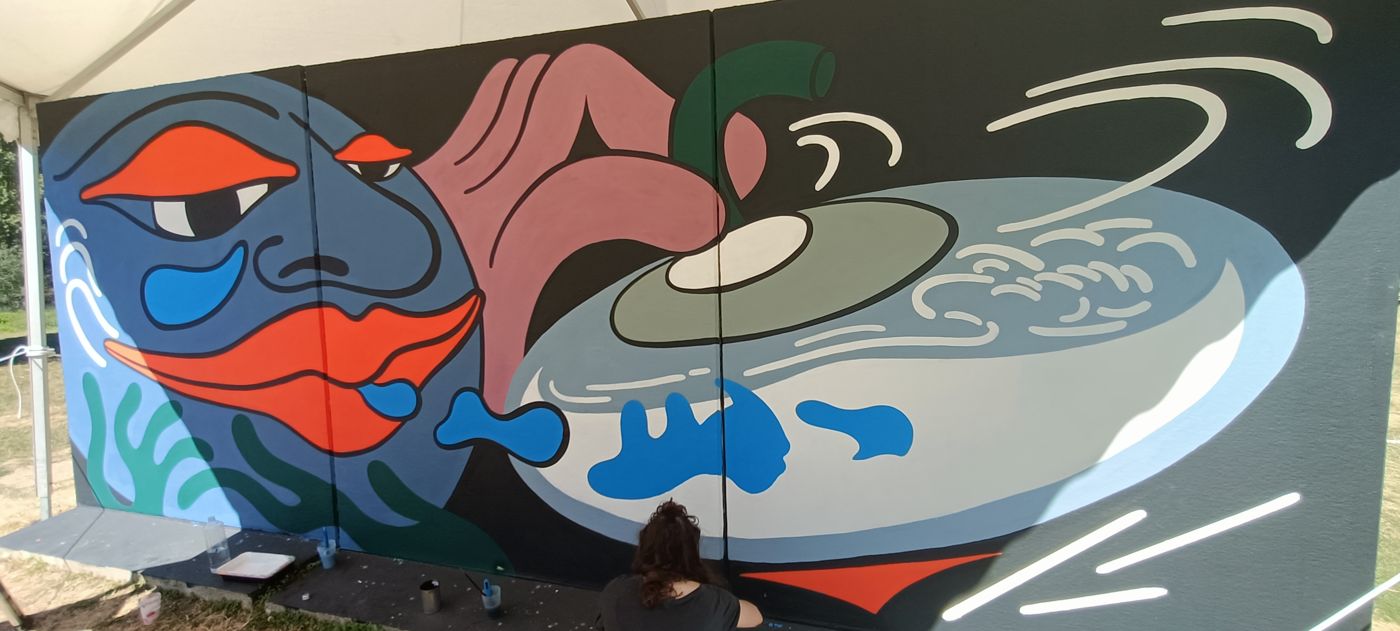
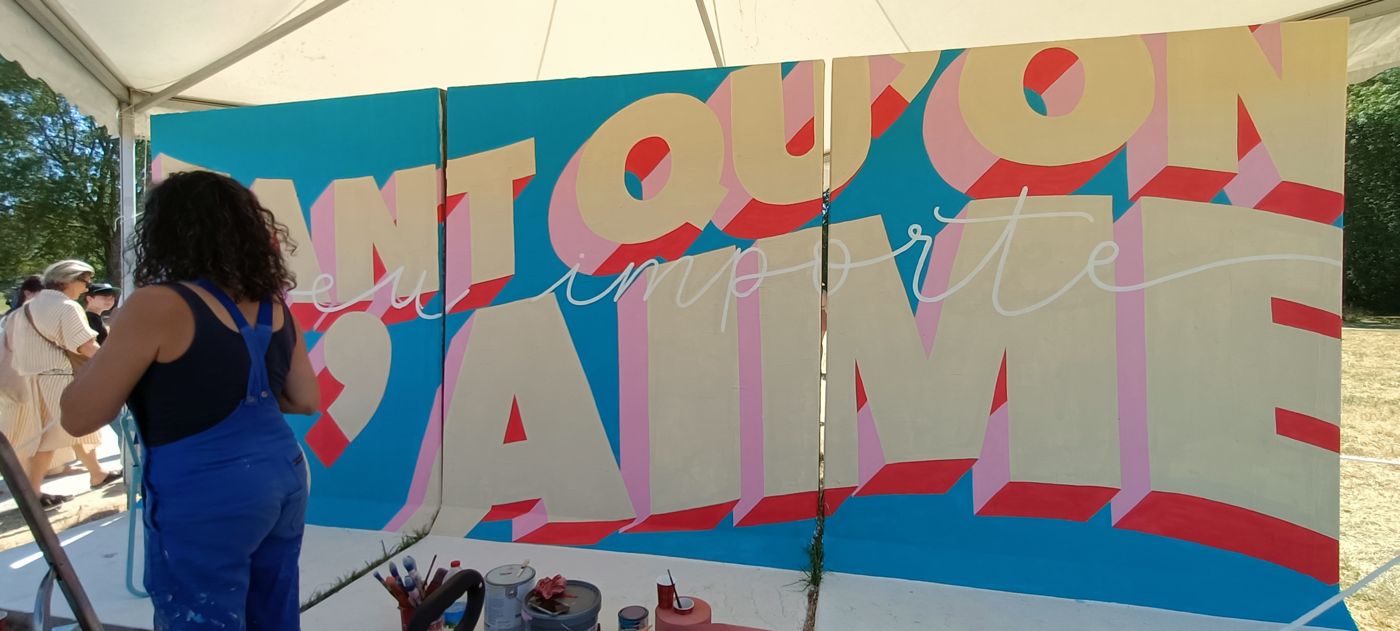
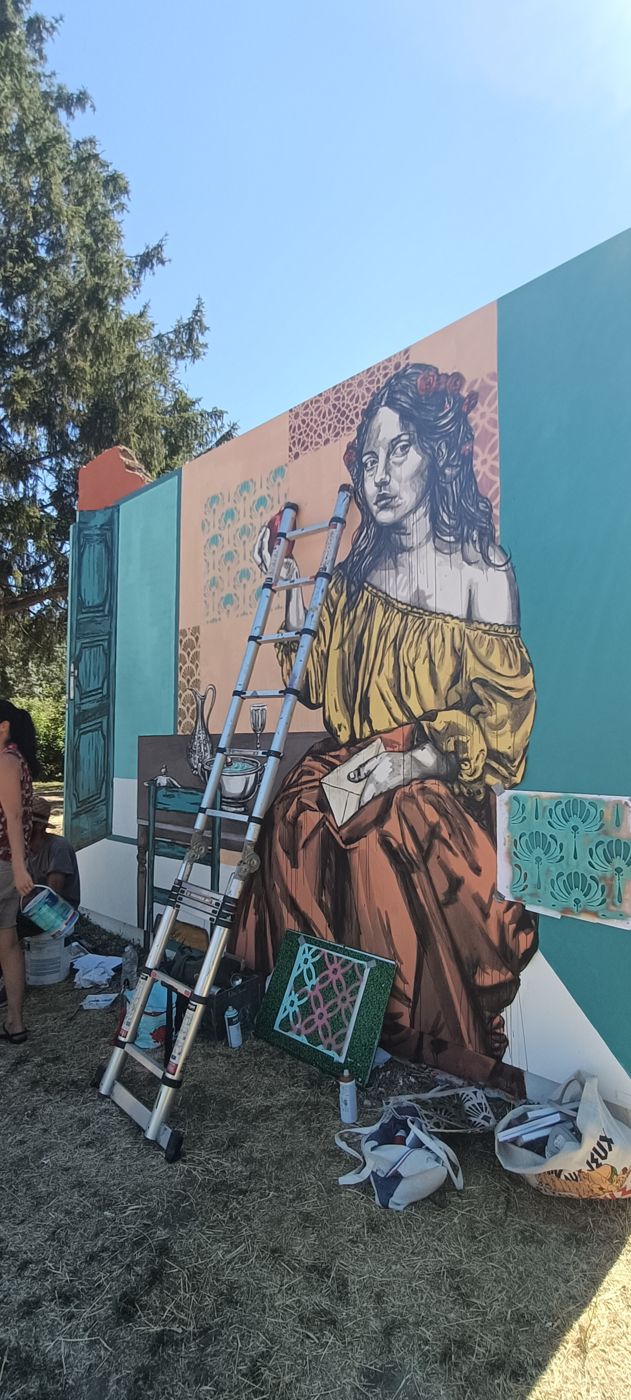
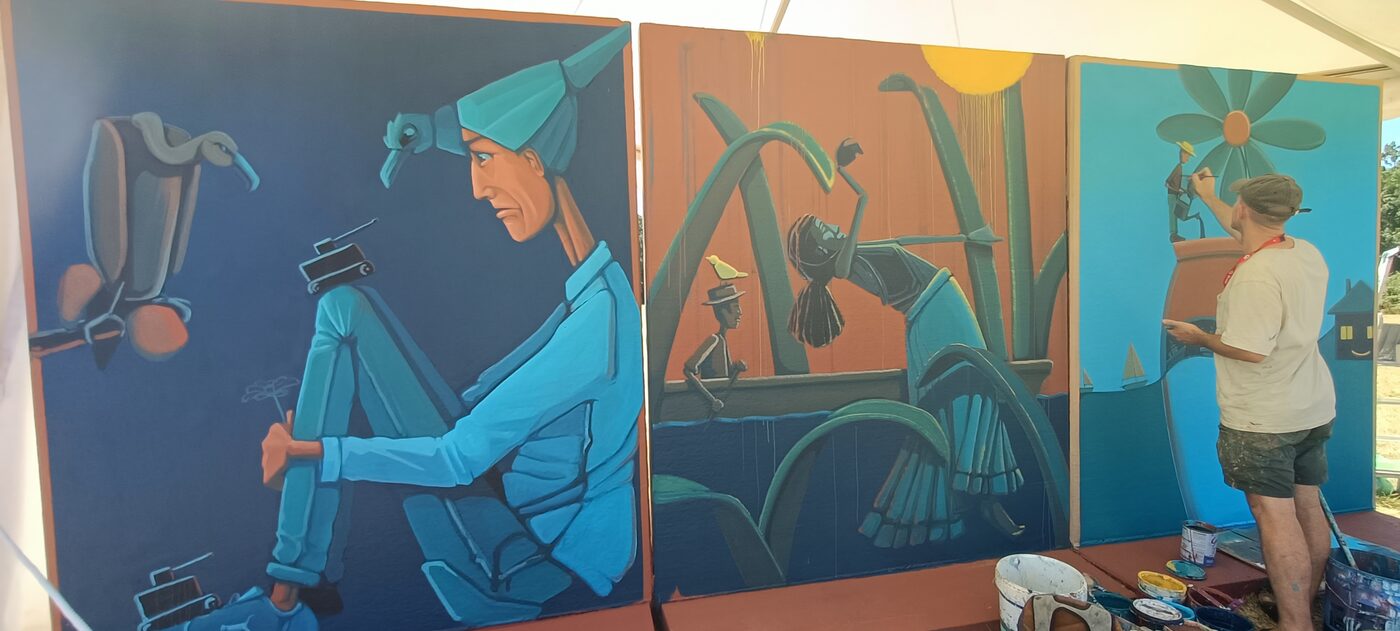
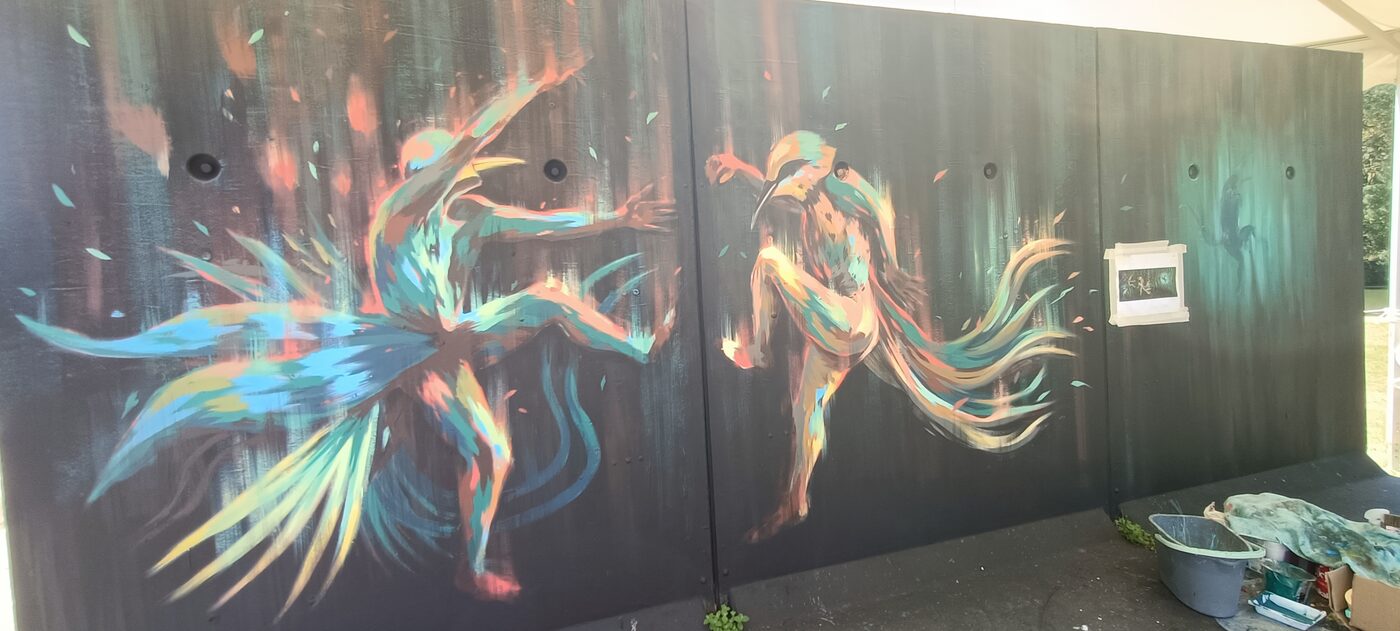
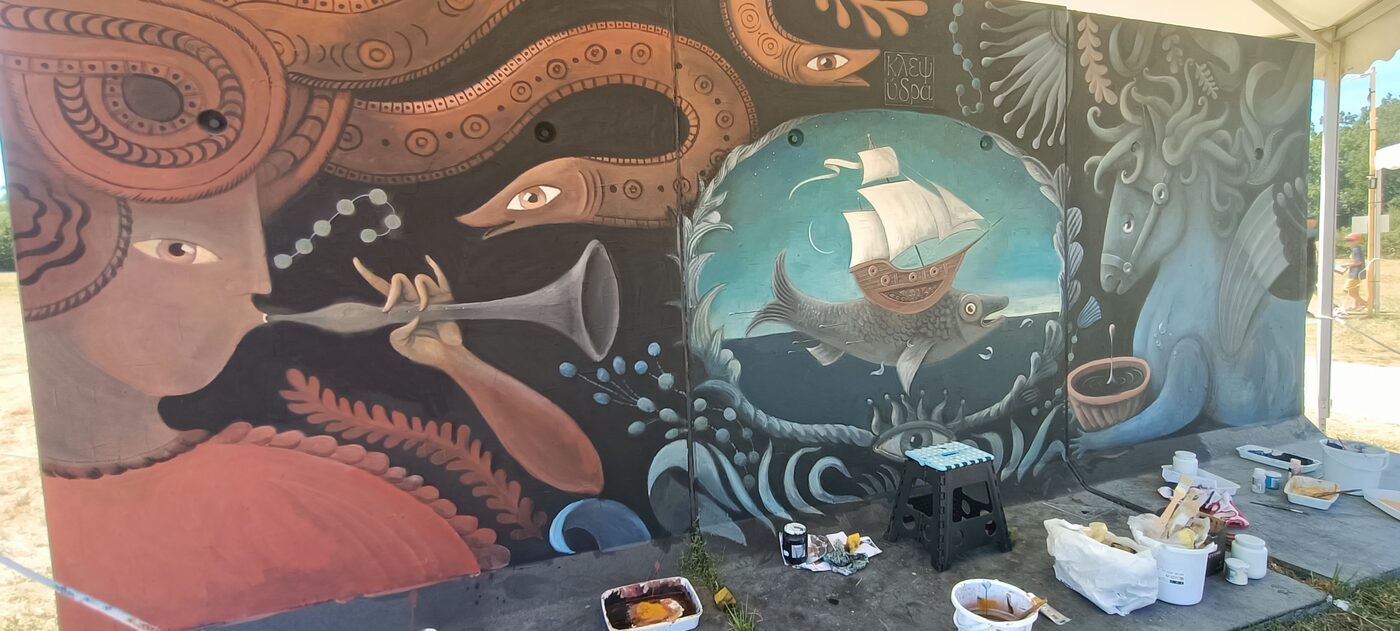
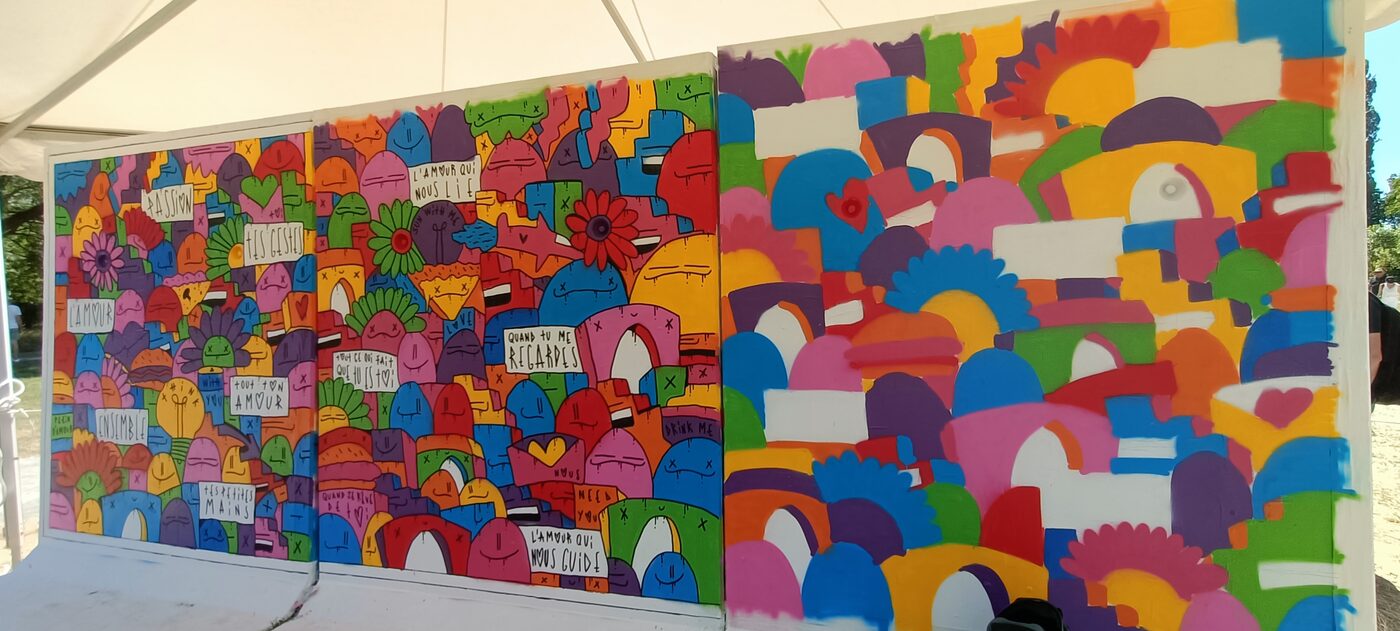
When you arrive, almost everything is still in progress. The panels are set up as triptychs, standing straight on the grass under white marquees, and in front of each one there is a ladder, open pots, cans lined up by colour, and someone at work. On one wall, a small printed photograph is taped at eye level: the reference the artist checks between passes.
Work in progress
From one marquee to the next, the styles are very different: realist painting, graffiti lettering, big blocks of flat colour.
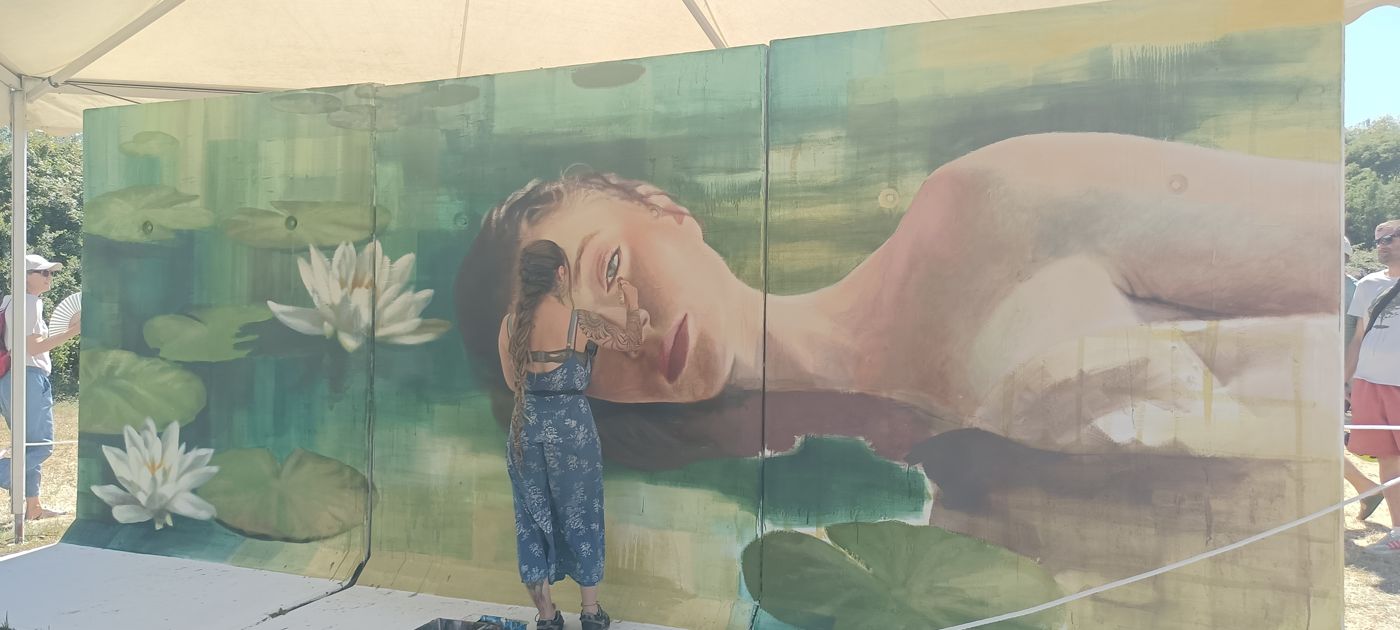
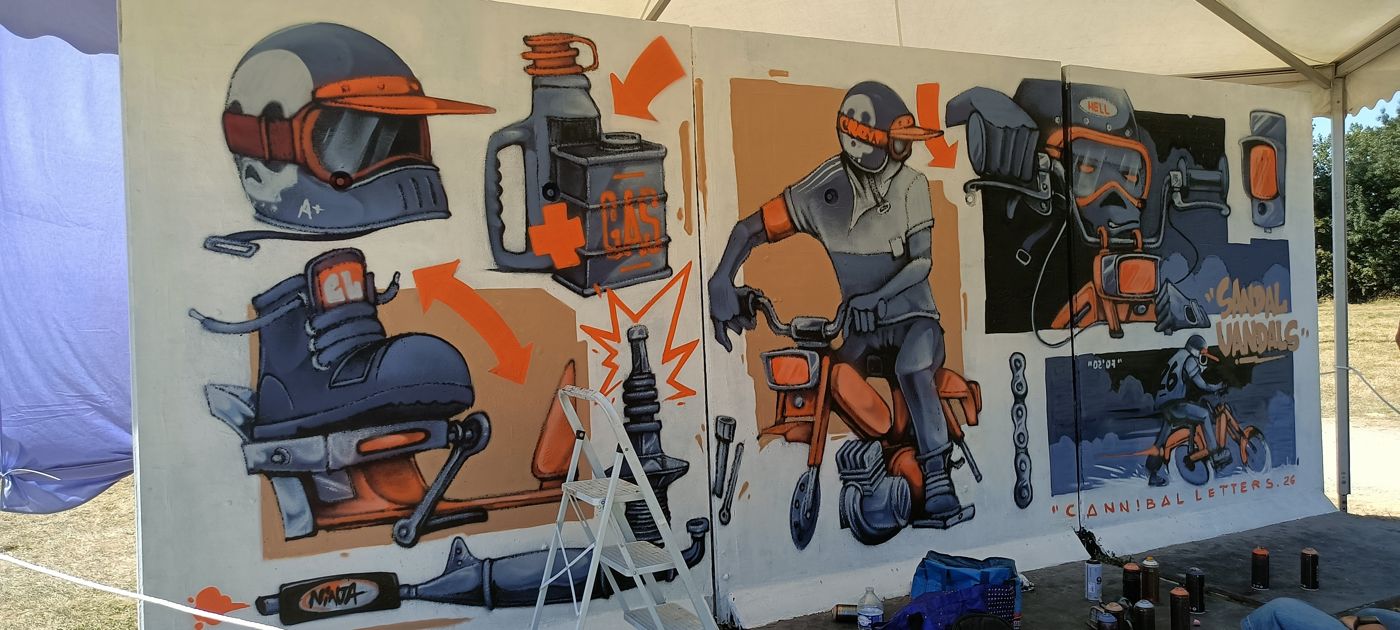
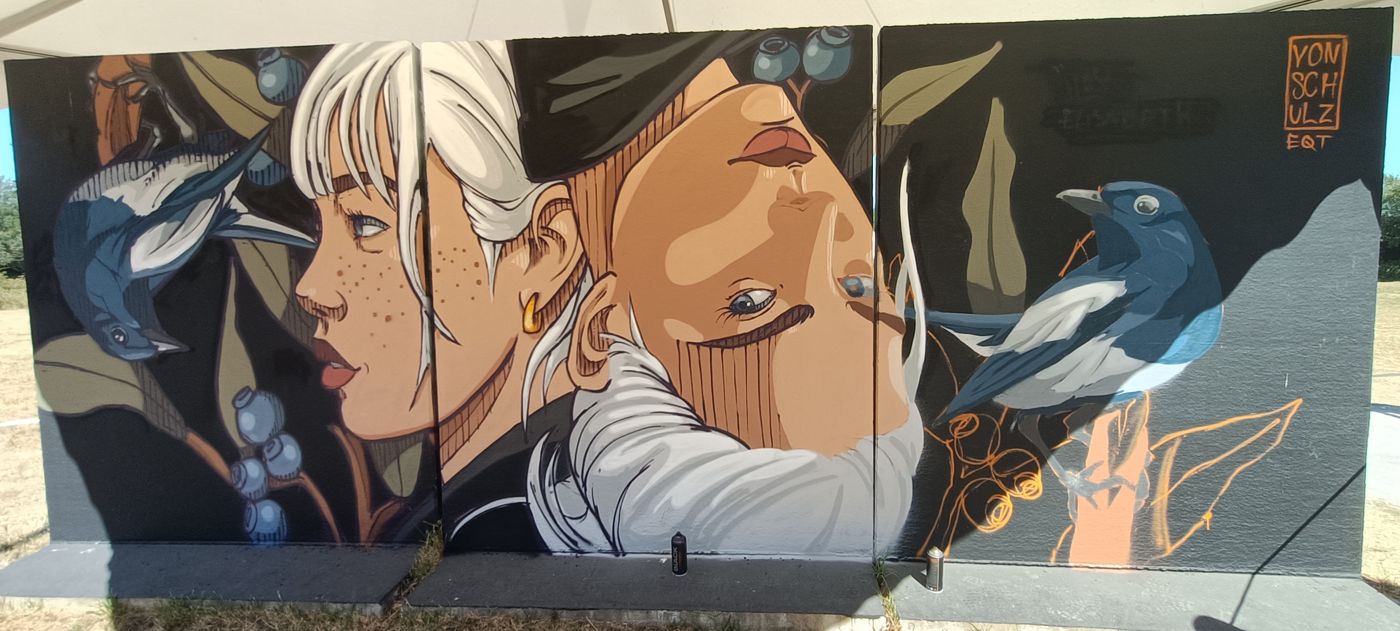
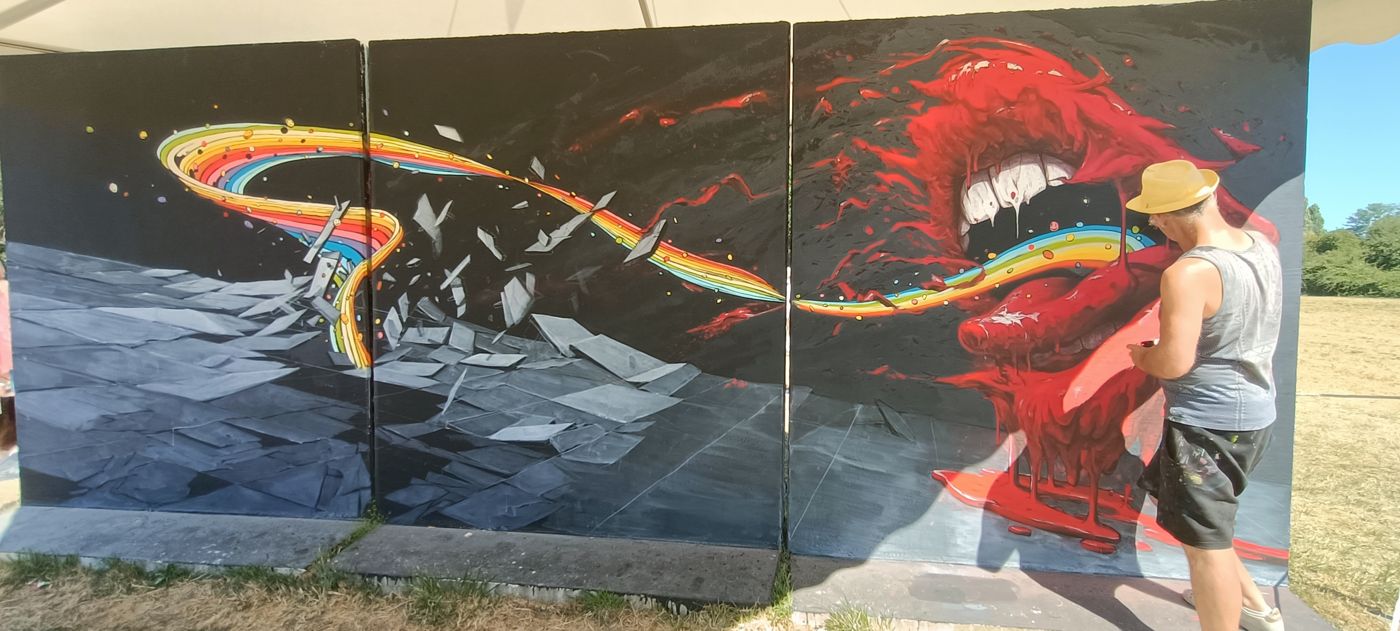
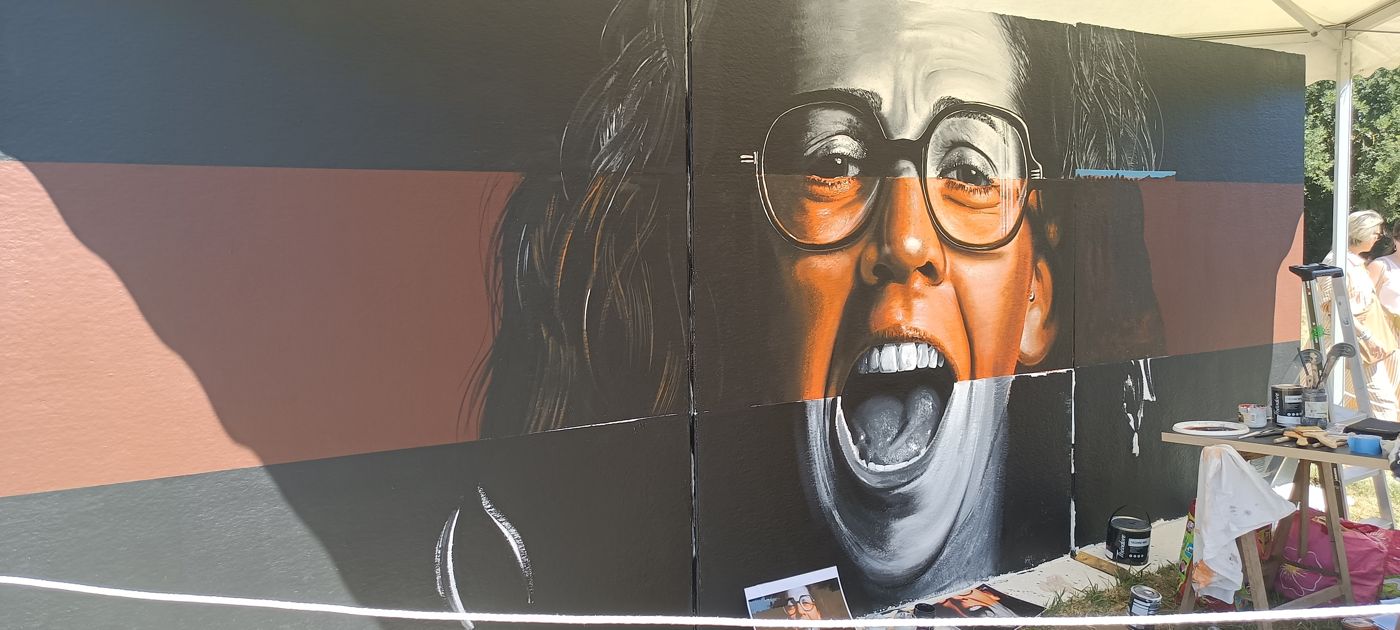
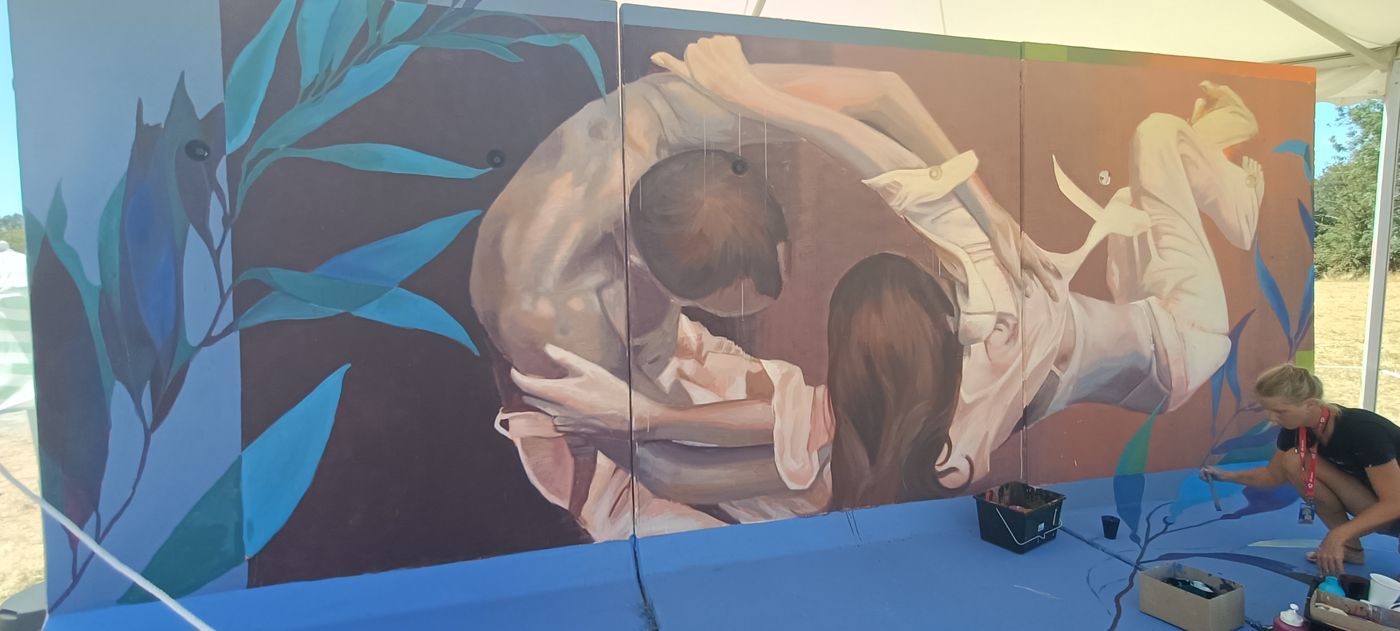
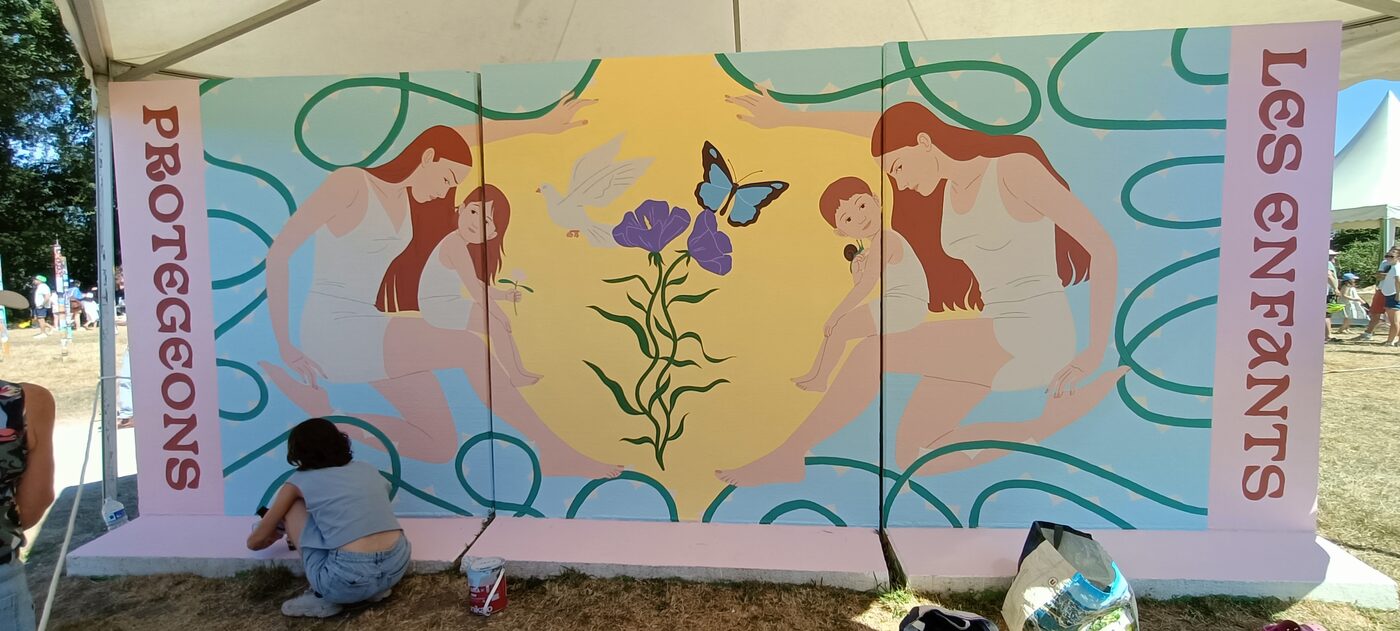
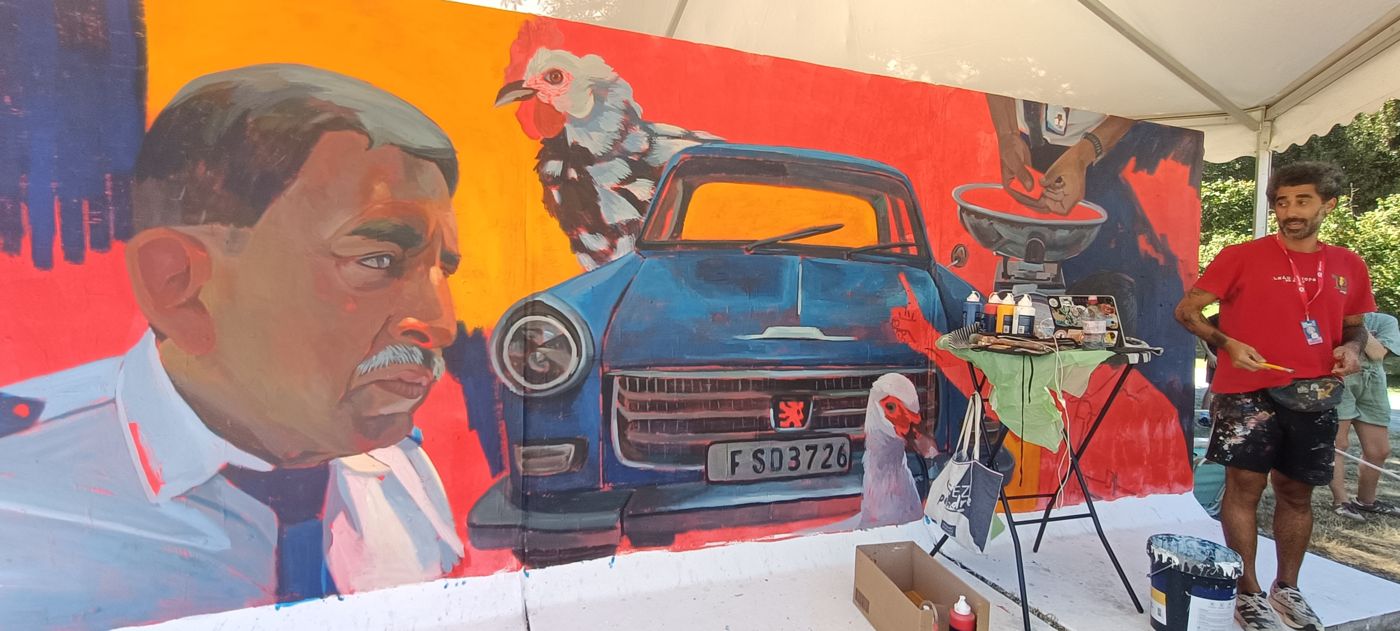
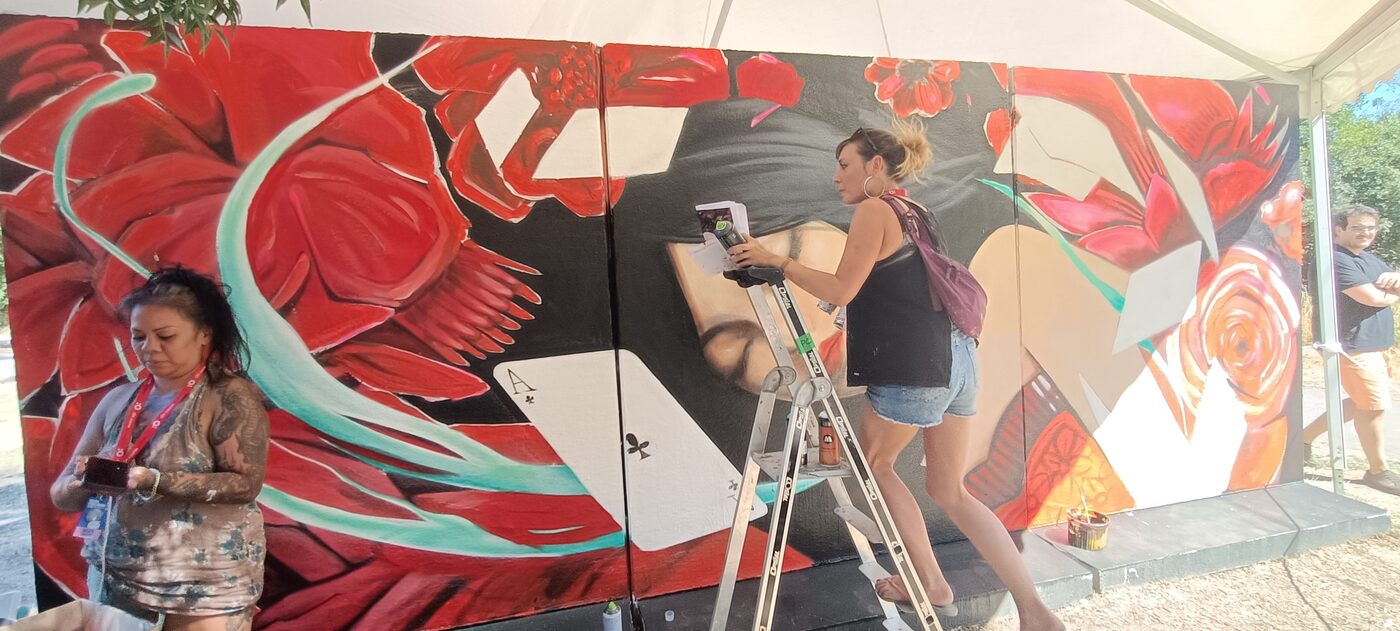
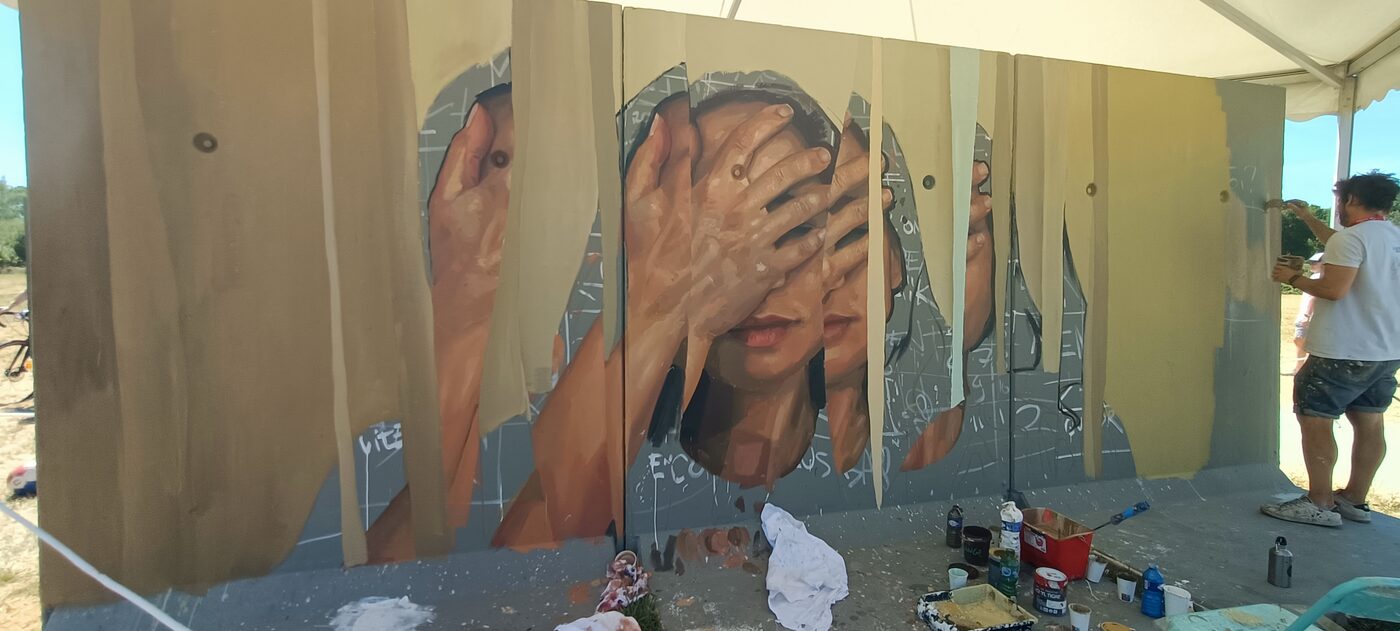
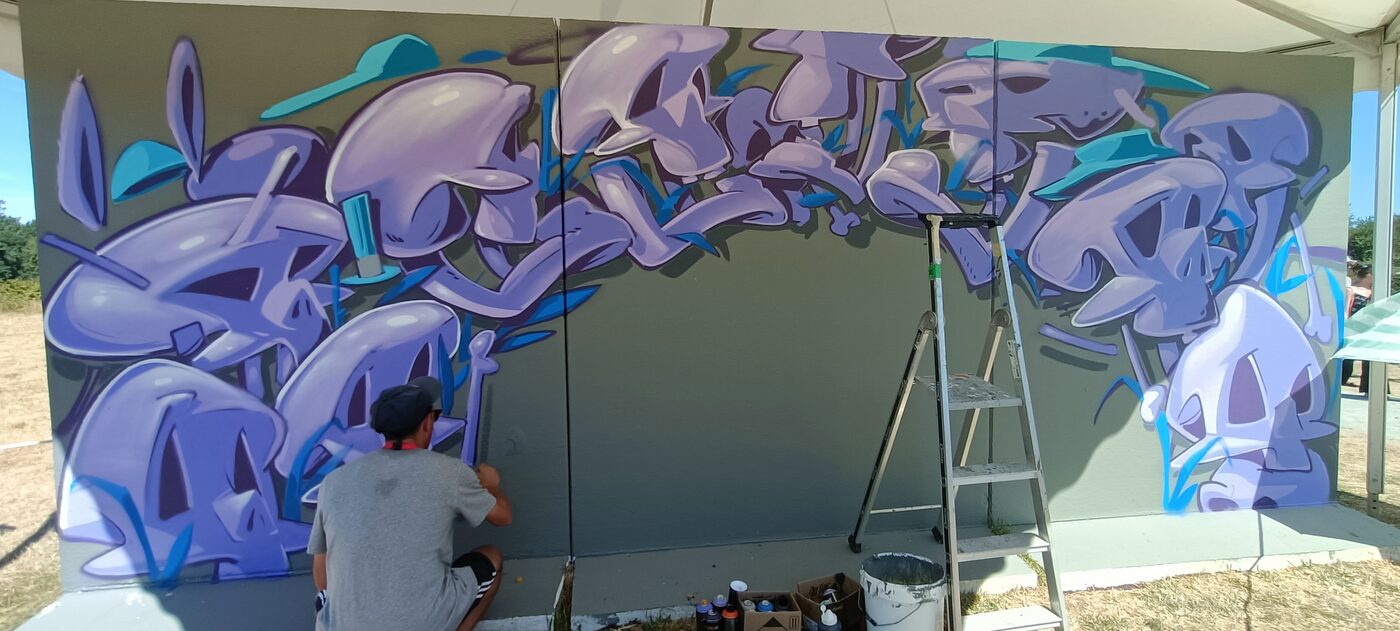
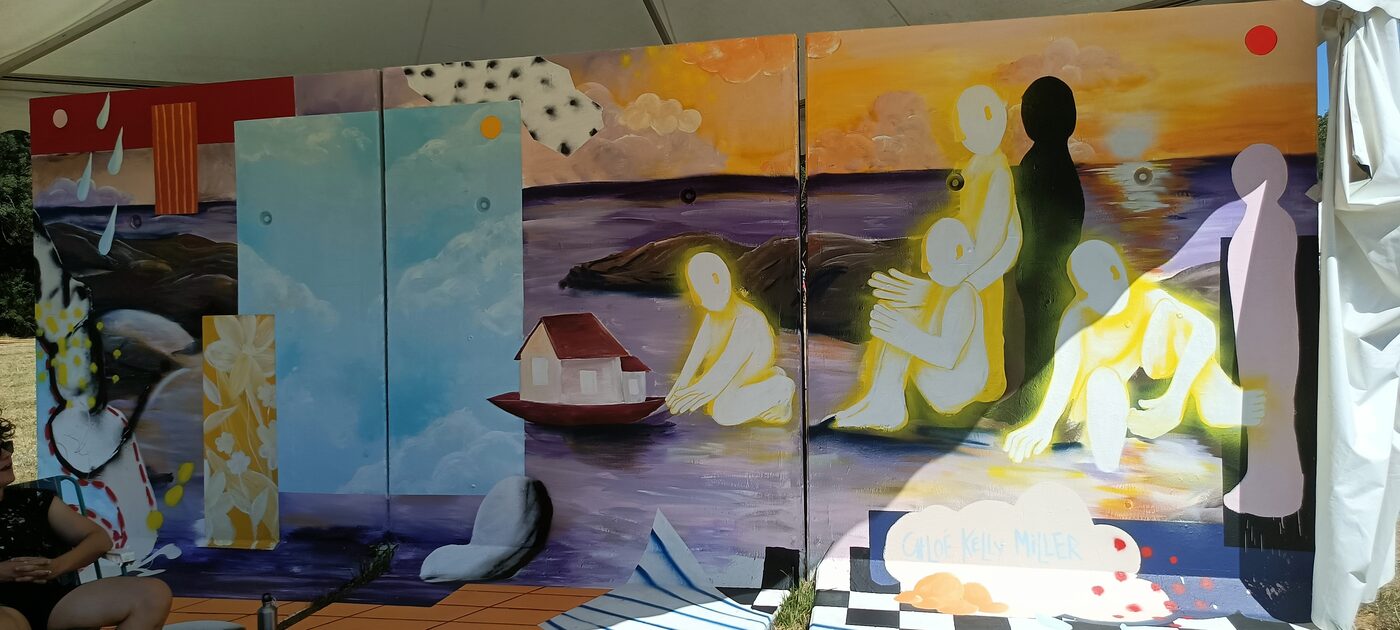
Vinie, guest of honour
The 2026 guest of honour was Vinie, a Toulouse artist known for her female character whose hair is made of tags and shout-outs. In Le Mans she painted one side of the Cube, and the hair turned into flowers.
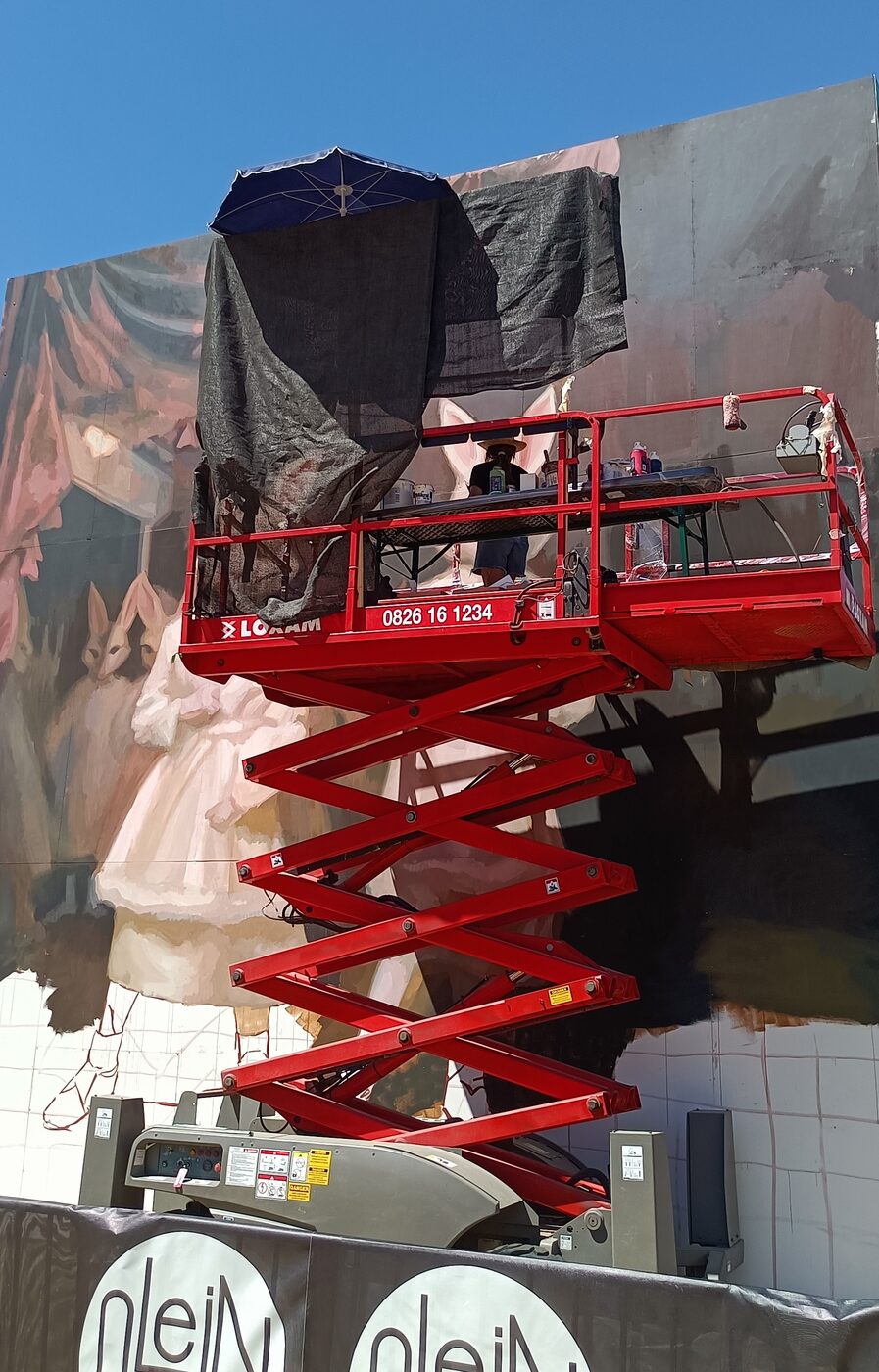
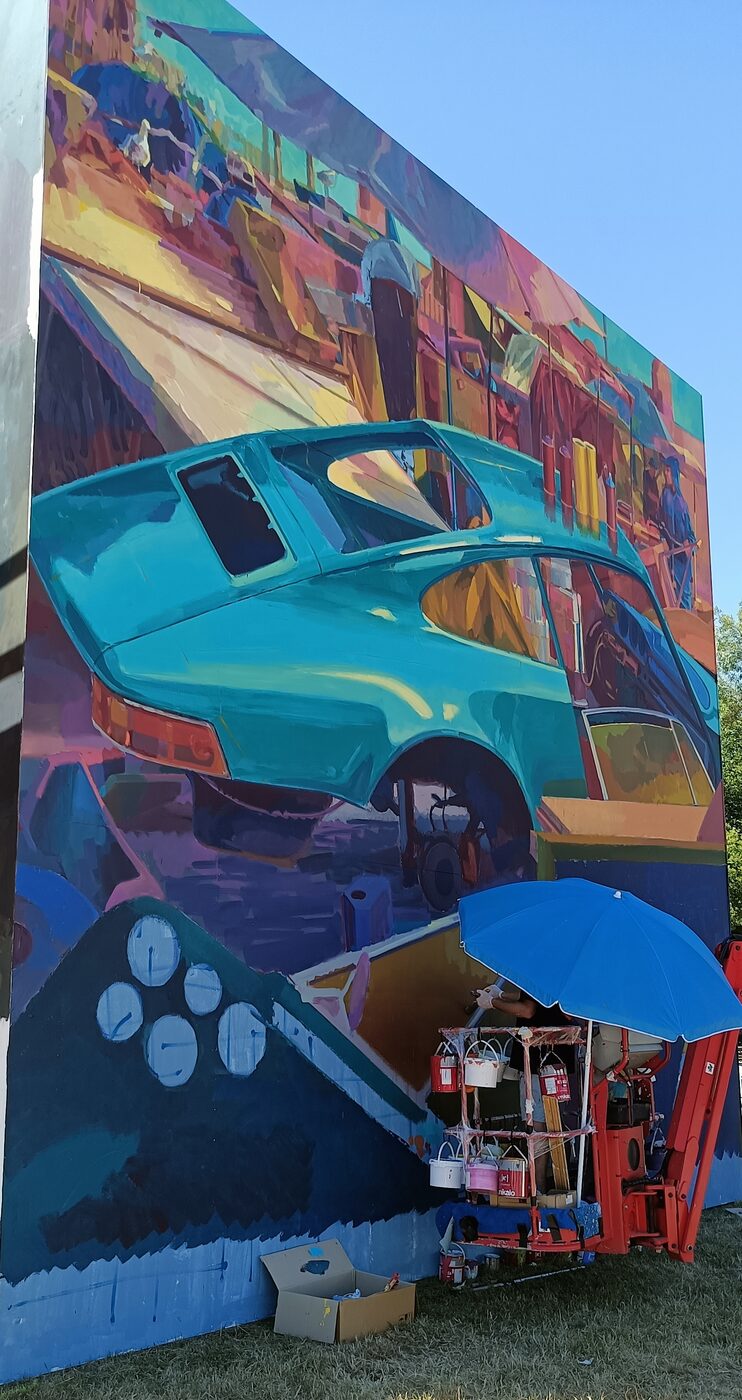
The other three sides went to Serbian artist Artez, Spanish painter Elisa Capdevila and Matthieu Pommier, from Nantes. All four painted from cherry pickers, under parasols: it was a very hot Sunday.
Beyond the Cube, Vinie also painted Les couleurs du quartier, one of the eight permanent wall commissions produced across the city in 2026, listed further down.
The thirty-eight artists of the edition
The official programme lists thirty-eight street artists, on top of the musicians, the installation makers and the workshop leaders, for ninety participants in all. All the painters have a page here, and some were on our map before this edition: Lyon writer Brusk of the DMV crew, Nesta, Gamo and Sly2.
Several artists come from abroad:
- Fio Silva, Argentina.
- Margot Margay, Mexico.
- Vlada Soshkina, Ukraine.
- Fernando Sawaya, Brazil.
- Perrine Honoré, Spain.
- Bjoern von Schulz, Germany.
- Artez, Serbia, and Elisa Capdevila, Spain.
The rest of the list: Adventis, Alice Wietzel, Anaïs Rallo, Apaiz, Aude Brouiller, Bishopparigo, Cannibal Letters, Chloé Kelly Miller, Christine Sejean, EvazéSir, Fragola de la Vega, Julia Dasic, Julien Mille, Macprale, Marie-Laure Mallet-Melchior, Marion Salle, Mimibang, Oji, Organe K, Petit_niochi, Remy Uno, Samione, Shupaone and Wha-T. Add to that Philippe Echaroux's night projections and a concert by Juste Shani, sign-language interpreted.
What stays in the city
Every year Plein Champ also commissions permanent walls across the neighbourhoods of Le Mans. There are now around sixty of them in the city. Our map lists forty-five, all photographed, ten of them inside the Gué-de-Maulny park itself: the festival left monumental pieces there long after the marquees came down.
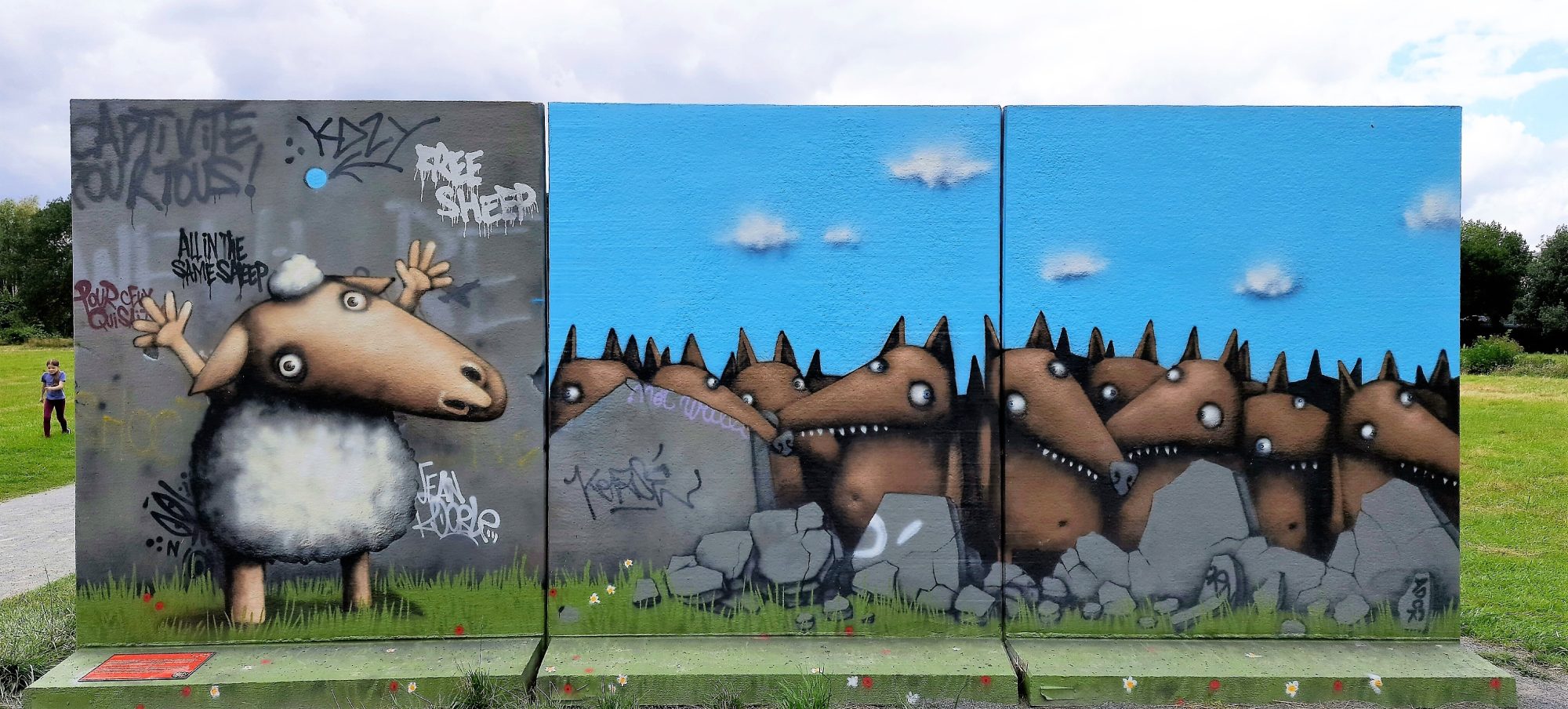
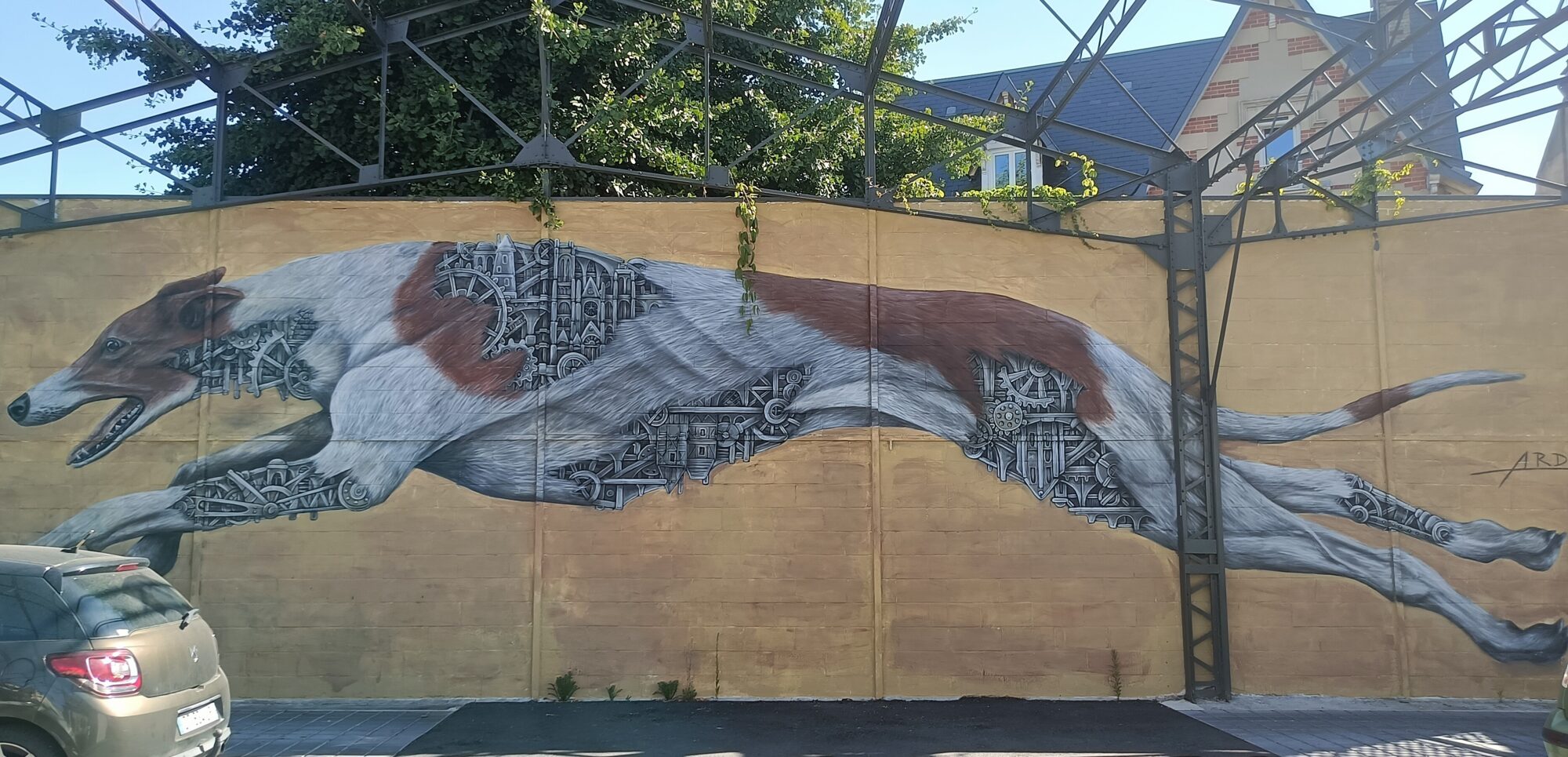
Two of the most recent walls come from the 2026 edition: Hors cadre, a three-dimensional anamorphic piece by Sweo and Nikita on Allée Schubert, and Le Mans Saint-Michel, painted by Dupin & Duclos on Rue du Sergent Lebouc. Earlier editions left Greyhound Mechanimal by Ardif on Rue Voltaire, L'Invitation by Tanala on Rue Guillot Ami, and Wen2's tribute to Jean Graton, the creator of the racing comic Michel Vaillant, on Avenue Bollée.
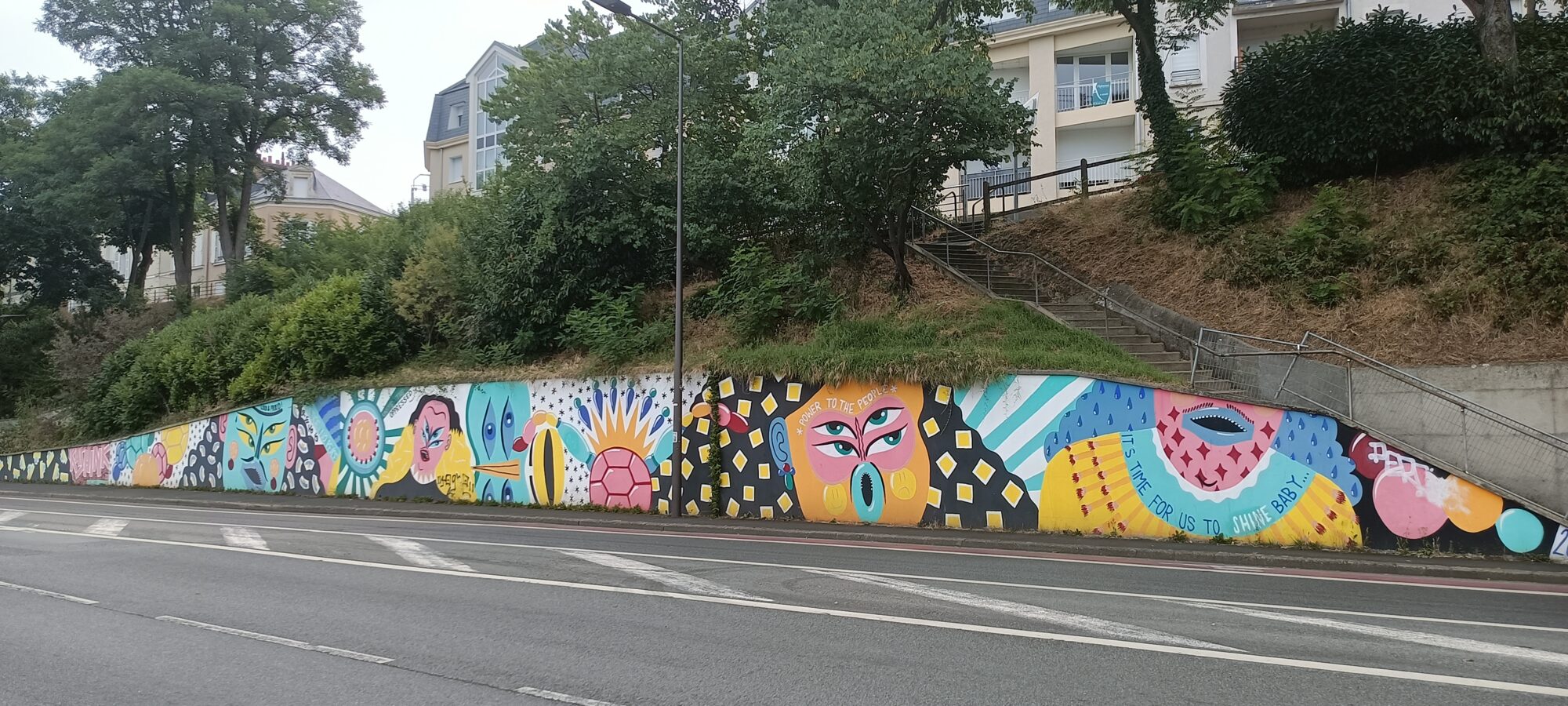
The park also keeps walls by Seth, Stom500, Bault, Zoer, CASE Maclaim and Zabou. In town, Kashink signed Power to the People on Rue d'Eichthal.
The 2026 edition produced eight permanent wall commissions: alongside Vinie's Les couleurs du quartier, there are walls by Sarah Lembo, Hubert Poirot-Bourdain, Tim Zdey, I can fly by WIA, Hors cadre by Sweo and Nikita, Street Life by Aero, and Le Mans Saint-Michel by Dupin & Duclos. Since 2019, each edition has added new ones around the city.
The full list is on the Le Mans page, and the map lets you build your own route, from the park down to the southern districts.
Getting there
The Gué-de-Maulny park is walkable from Le Mans south station, or by bus: line 16, stop Jean-Michel Gaudré, or Tempo lines 3 and 13, stop des Pêcheurs. Car and bicycle parking sit along the park. During the festival the welcome desk hands out earplugs and noise-cancelling headphones, vibrating vests on request, walking-stick seats, and identification wristbands for children; sign-language interpreters are present on the Saturday. Outside the festival, the park and its murals are freely accessible all year.
The festival returns every year on the first weekend of July. If you photograph a wall in Le Mans that is not on the map yet, add it.
Back to blog